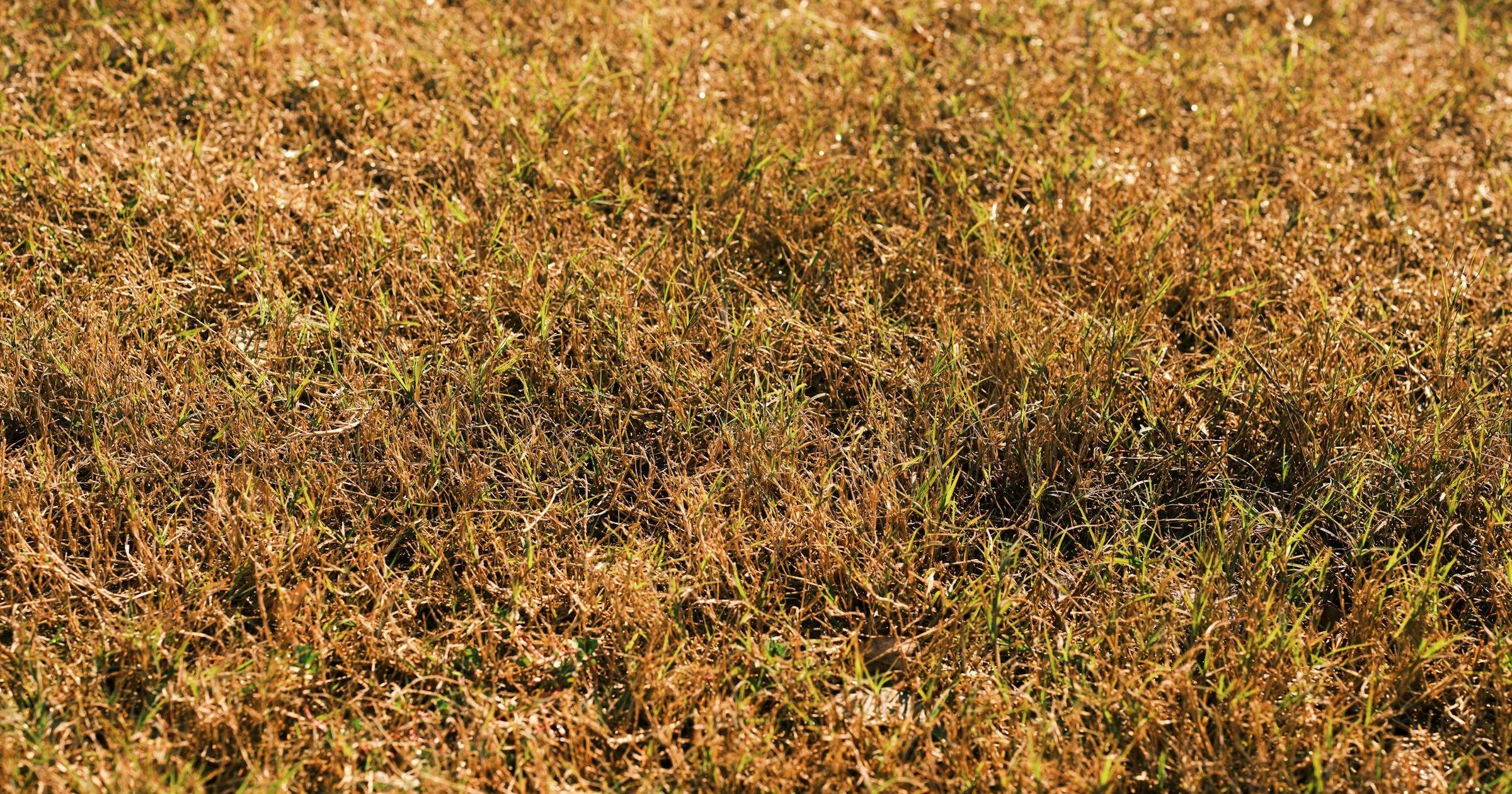
"My Sir Walter's dying." It's the most common buffalo question of the cool months, and the answer is almost always no. Buffalo grass goes off-colour, slows down, and in colder regions it semi-dormants its way through winter. That's normal cold-response physiology, not death.
The harder question is telling normal slowdown apart from actual problems, and knowing what to change in your maintenance so a healthy lawn doesn't drift into a damaged one.
What buffalo actually does in autumn and winter
Buffalo is a warm-season grass. Optimal growth temperatures sit around 27–32°C. As soil and air temperatures drop through autumn, photosynthesis slows, root activity slows, and visible top growth slows even more dramatically. By mid-winter in southern Australia, a buffalo lawn might add a few millimetres of leaf in a fortnight where in summer it'd add the same in three days.
That's a slowdown, not a shutdown. Buffalo has one habit that distinguishes it from the other warm-season grasses common in Australia: it holds on to leaf much better than couch or kikuyu through cool weather. Where couch will go fully brown in Adelaide or Melbourne winters, buffalo typically retains a recognisable lawn. Off-colour, but green at the heart of each plant.
The off-colour part is two different things, and they're often confused.
Yellowing
Yellowing comes from reduced chlorophyll production as cool temperatures slow the underlying enzymes. With less green pigment in the leaf, the carotenoids underneath show through and the lawn looks pale yellow-green. This reverses on its own when temperatures recover.
Purpling
Purpling is anthocyanin response. The plant produces these red-purple pigments under cold stress, especially when bright winter sun is also part of the picture, and the result is a visible purple cast across exposed areas of leaf. Some Sir Walter lawns purple noticeably; some Palmetto lawns barely do at all. The purpling itself isn't damage. The plant is reacting to cold and bright sun, which is what a healthy plant does.
Cultivar variation
Sir Walter, Palmetto, Sapphire, and the ST series each behave a little differently in cool weather:
- Sir Walter holds colour reasonably well in mild winters but purples readily in colder zones.
- Palmetto tends to slow more visibly than Sir Walter through cooler temperatures, then recovers strongly in spring.
- Sapphire is the softer-leaf option of the bunch. In colder regions it can look notably worse-for-wear by mid-winter and lift surprisingly in spring.
- ST26 / ST91 sit somewhere between Sir Walter and Palmetto on cold tolerance.
If you don't know which cultivar you have, none of this is critical. The practical advice is the same.
The climate-zone picture
Where you live shapes how much of any of this you'll see. Buffalo is grown across most of populated Australia, and the same lawn behaves very differently depending on how cold the soil actually gets.
Here's the rough picture by capital, based on typical winter soil temperature and frost incidence:
| City | Typical winter behaviour | Frost watch |
|---|---|---|
| Hobart | strong off-colour, semi-dormancy in pockets | multiple events per year |
| Melbourne | marked off-colour, slow recovery | occasional |
| Adelaide | off-colour, low but active growth | occasional |
| Sydney | holds reasonable colour, slower growth | rare |
| Perth | similar to Sydney | rare |
| Brisbane | minimal change, slight slowdown | very rare |
| Townsville | barely registers | none |
| Darwin | no meaningful change | none |
The cold-region behaviour (Hobart, Melbourne, cooler Adelaide) is where buffalo earns its reputation as more forgiving than couch. A couch lawn in those zones will typically go fully brown, where the buffalo lawn next door retains some living leaf the whole way through. The trade-off is that buffalo grown at the cold edge of its range needs more careful management of mowing height, traffic, and fertiliser timing if it's going to come through in good shape.
In Sydney, Perth, and Brisbane, a buffalo lawn through winter looks much like itself in autumn. Slower, perhaps a touch off-colour during a cold snap, but recognisably the same lawn.

Frost on warm-season turf — typical of southern AU winters
What to do (and what to stop doing)
The autumn changes to your maintenance program aren't dramatic. Most of them are small adjustments that respect the slowdown rather than fighting it.
Raise the mowing height
Summer height for buffalo is usually 30–50mm depending on cultivar. Through autumn and winter, lift it 15–25mm. Sir Walter and ST cultivars handle 60–70mm comfortably. Higher leaf area means more photosynthesis on the limited daylight. The longer leaves also shade the soil, which helps with weed pressure and gives some buffer against frost damage.
Drop the watering frequency
Buffalo's water demand is mostly driven by transpiration, which scales with temperature and sunlight. Both are lower in winter, so the lawn needs less water less often. Don't stop entirely. Extended dry spells in mild winter regions still dehydrate buffalo, but a once-a-week deep watering is usually plenty in Sydney or Perth conditions. In cooler southern regions, dryland behaviour is fine through most of winter where rainfall covers it.
Apply pre-emergent if you haven't already
Winter weeds, mainly poa annua, are the main pressure on buffalo lawns through the cool months. Pre-emergent at the right soil-temp window stops them before germination. The timing window is regional. Autumn pre-emergent timing for Australian lawns covers when to apply across the climate zones.
Optional: iron, not nitrogen
A foliar iron application restores green colour to a yellowing buffalo lawn without pushing growth. It's purely cosmetic. The lawn isn't deficient in iron, the cool temperatures are just slowing chlorophyll production, but iron gives visibly greener leaf within a few days. Granular iron plus sulphate of ammonia at low rate is the standard approach. Skip it if you're happy living with the off-colour look through winter.
Stop doing these
- Heavy nitrogen. Pushing N into a slowing lawn forces soft, vulnerable top growth right when conditions favour fungal disease. Grey leaf spot and brown patch both like cool damp conditions and lush soft tissue. A late-summer application is fine; through actual autumn and winter, hold off.
- Dethatching and scalping. Both create bare crowns and exposed soil at the worst possible time. The lawn doesn't have the growth rate to recover before winter sets in. Save dethatching for early spring when growth is accelerating.
- Top-dressing. Same logic. Top growth needs to push up through the dressing, and that doesn't happen fast enough in autumn.
- Heavy traffic on damp lawn. Slow growth means slow recovery from compaction or wear. Damage from a backyard party in March can still be visible in August.
CoreTurf tracks soil temperature and growing-degree-day accumulation for your location, so the seasonal slowdown isn't something you guess at. One way to time these changes, not the only one.
When to worry (and when not to)
Most autumn buffalo questions come down to telling normal cool-season behaviour apart from actual problems. Here's a rough guide.
Almost certainly normal
- General off-colour across the whole lawn
- Purpling in exposed sunny areas with no purpling in shade
- Slower growth between mows
- Slight thinning in heavily-shaded areas
- A silvery-grey cast for a day or two after a frost, recovering as the temperature comes up
Worth investigating
- Yellowing or browning in defined patches (circles, arcs, or bands) rather than spread evenly
- Areas that go from green to dead-looking inside a week
- A musty smell, or visible fluffy growth at the soil line in damp conditions
- Mat or thatch underneath the leaf that's holding moisture and not drying out
The patch-shaped problems are usually fungal. Grey leaf spot and brown patch both produce defined-shape dieback, more obvious in irrigated lawns or after a wet autumn. Both respond to a fungicide if caught early, and both are made worse by late-season nitrogen.
The smell-and-fluff combination is also fungal, and an immediate fungicide application is worth the cost.
When does the lawn green up again? Buffalo greens up as soil temperatures recover into the 18–20°C range, which is usually mid-spring in southern states and early spring in the warm sub-tropics. The recovery is gradual rather than overnight, with the colour coming back over a few weeks as growth re-engages and chlorophyll production catches up.
Common questions
Is my Sir Walter dying?
Almost certainly not. If the lawn is off-colour, purpling, or slow-growing across the whole area roughly evenly, that's the cool-season behaviour described above. Look for dieback in defined patches as a sign of something worth investigating. If the centres of the plants still look green and the only issue is faded leaf colour, you're watching the lawn do what it does in autumn.
Should I fertilise buffalo in autumn?
Heavy nitrogen in autumn is a poor idea. It pushes soft growth into the season most likely to cause fungal disease, and the lawn doesn't really need the nitrogen anyway because its growth rate is dropping. A light potassium application going into winter is sometimes recommended for cold-stress hardening, but the evidence is mixed for buffalo specifically. If you want to put something down, an iron application for colour is safer than a nitrogen-based fertiliser.
Does buffalo go fully dormant in Australia?
In most of populated Australia, no. In Hobart and the cooler parts of Melbourne and Adelaide, buffalo can semi-dormant in a cold winter, retaining living crown tissue but losing most leaf colour and growth. In Sydney, Perth, Brisbane, and warmer parts of the southern capitals, full dormancy is rare. The lawn slows down dramatically but stays visibly alive.
Why is my buffalo turning purple?
Anthocyanin pigment production in response to cold and bright sunlight. It's a visible stress response, but the plant continues to function. The colour fades as temperatures recover, and there's nothing to do about it other than wait. Some cultivars purple more than others. Sir Walter is moderately prone, Sapphire less so.
Should I cover or protect buffalo from frost?
For a once-a-year light frost, no. The leaf takes a hit but recovers. For a hard frost or repeated frosts in a single week in regions where this is a real concern (Hobart, frost pockets in Melbourne and Adelaide, parts of inland NSW), a frost cloth thrown over a small lawn can reduce damage. Most Australian buffalo owners just accept the temporary leaf damage and let the lawn recover in spring.
When will my buffalo green up again?
When soil temperature climbs back through 18–20°C and the days lengthen. In Brisbane and Perth that can be early September. In Melbourne and Adelaide, mid- to late September. In Hobart, October. The recovery is gradual over a few weeks, not a single colour-flip.