"Apply pre-emergent in April." That's the standard advice on most Australian lawn forums, and it's wrong in both directions. Too early if you're in Hobart. Too late if you're in Brisbane. The date on the calendar has almost nothing to do with whether the herbicide is going to work.
What actually matters is soil temperature. Here's why the calendar fails, what temperature to watch instead, and roughly when that window opens across AU climate zones. Couch, kikuyu, buffalo, cool-season — the winter weeds don't care what you're growing.
What pre-emergent actually does
Pre-emergent herbicide is soil-active. It sits in the top few centimetres of soil and stops weed seeds from establishing. When a seed germinates and the root tries to push down into that treated layer, the seedling dies before a leaf ever breaks the surface.
The application is prophylactic. If you can already see winter grass or poa annua in the lawn, you've missed the window. Pre-emergent does nothing to weeds that have already germinated. You'd be moving to post-emergent control at that point, which is a different product and a different conversation.
Common pre-emergent actives in the Australian market include prodiamine, pendimethalin, and dithiopyr. Each has its own label rate, activation requirements, and residual period. This post doesn't get into product selection — pick your product using the manufacturer's technical data. The timing question is the same either way.
Why the calendar method fails
Seed germination is temperature-triggered, not calendar-triggered. The seed sits dormant in the soil through summer, then starts germinating when soil temperature drops into its preferred range. For winter annuals — poa annua is the main one in Australia, where it's usually just called winter grass — that range centres around 18°C at 10cm depth, trending down.
Now compare that to the geography. Australia runs from Hobart at 43°S to Darwin at 12°S. "April" in Hobart is not the same month as "April" in Darwin. Soil temperatures in southern Tasmania can drop through 18°C in early March. In the top end, they might not cross 18°C at all in a given year.
Here's a rough picture of when 10cm soil temperature typically trends through 18°C in each capital, based on historical averages:
| City | Typical soil temp window | Rough "apply by" |
|---|---|---|
| Hobart | early March | late February to early March |
| Melbourne | mid to late March | mid-March |
| Adelaide | late March to early April | late March |
| Sydney | mid April | early to mid April |
| Perth | mid to late April | mid-April |
| Brisbane | late April to early May | late April |
| Townsville | late May (if at all) | monitor |
| Darwin | rarely relevant | — |
Applying on 25 April everywhere puts you six weeks late in Hobart and roughly on time in Brisbane. Same date, very different outcomes.
The soil temperature rule
The number to watch is the 14-day trailing average soil temperature at 10cm depth.
Why 14 days and not today's reading? Seeds don't respond to a single cold snap or a warm afternoon. Germination physiology is triggered by sustained temperature conditions over several days. A one-off reading can be misleading — you could have a 14°C morning inside a warm week and the seeds wouldn't budge. The trailing average smooths that out.
Why 10cm? It's the standard meteorological measurement depth. The Bureau of Meteorology and most agricultural stations measure at 10cm, so it's the number you can actually get hold of without a soil probe of your own. It also happens to be a stable proxy: deep enough to smooth out the hourly ambient swings, shallow enough to track what's happening closer to the surface where the seeds actually sit. The seed bank itself lives in the top 1–2cm, at the thatch-soil interface — but surface temperature at that depth bounces around too much from one hour to the next to be useful for timing.
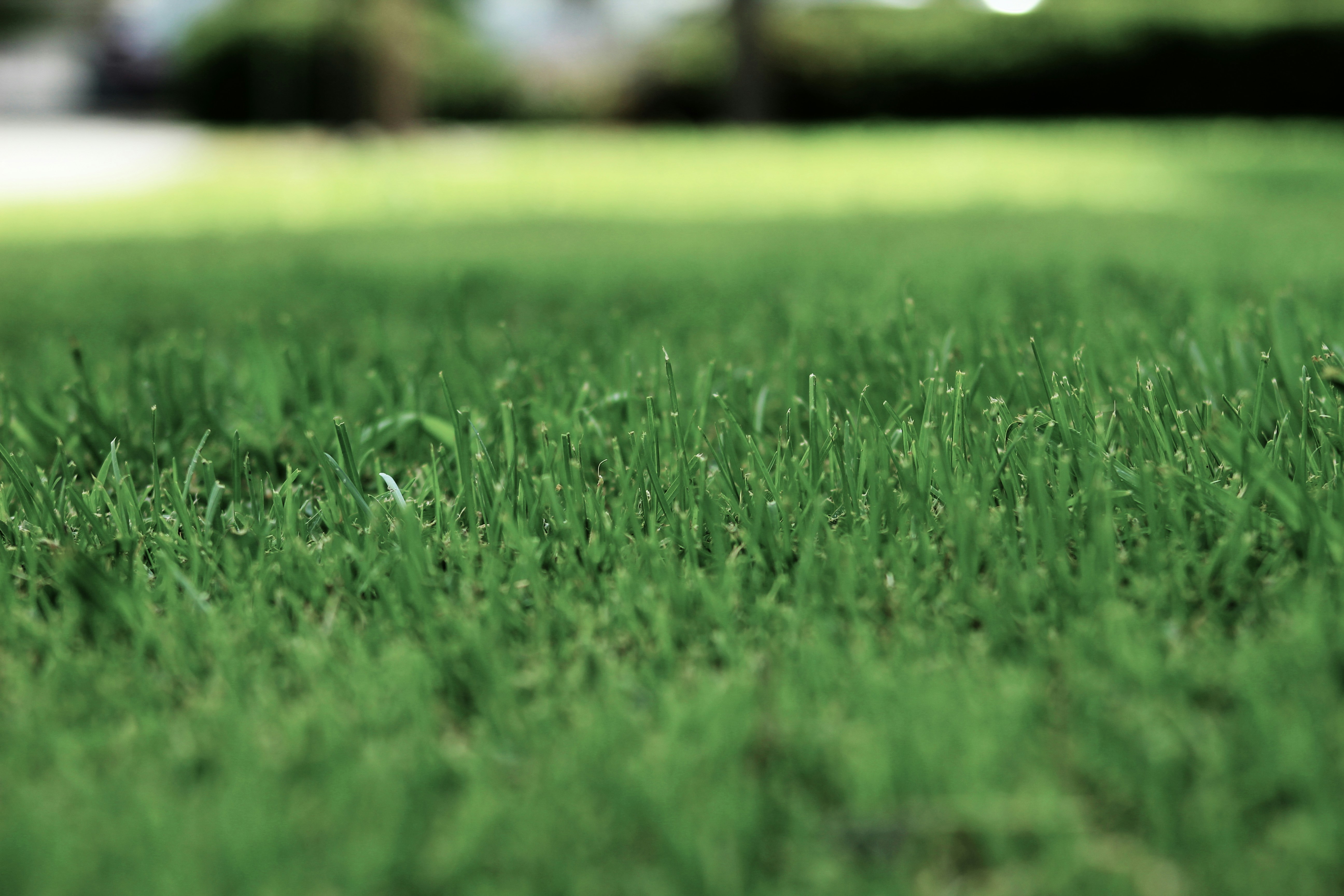
Seeds sit at the thatch-soil interface — the top 1–2cm
The rule is straightforward. Watch the 14-day average trend downward. Apply pre-emergent as it approaches 18°C, ideally a week or two before it crosses. You want the herbicide already in place and activated when germination conditions arrive, not still sitting on the shelf.
Where to get the number:
- The Bureau of Meteorology publishes soil temperature data at selected stations. The coverage is patchy and the lag is usually a day or two, but it's free and it's real measurement (bom.gov.au).
- Some agricultural weather services and apps pull soil data from the nearest BOM station and do the trailing average for you.
- If you've got a soil probe, take a reading every couple of days and average them yourself.
CoreTurf pulls the 14-day trailing soil temp from your nearest station and flags when the window opens. One way to solve the problem, not the only one.
Practical application across Australia
Southern states (VIC, TAS, SA, southern NSW, southern WA)
This is the early window. Soil temperatures in these regions can trend through 18°C any time from late February (Tasmania in a cool year) to early April (Adelaide in a warm one). Most lawn owners here apply too late because they're waiting for autumn to feel like it's arrived — but the seeds don't wait for the weather to look convincing.
Target weeds: poa annua (winter grass) and some broadleaf species.
Temperate coast (Sydney, Perth, Adelaide coast)
Mid-April to early May in most years. This is closest to the traditional April timing, which is probably why that advice took hold in the first place; it was written for this band. Sydney is the most forgiving of the calendar approach. Perth and Adelaide still drift a week or two earlier than Sydney in the same calendar window.
Sub-tropical (Brisbane, northern NSW, Perth hills)
Late April to mid-May. Brisbane soil temperatures tend to linger in the low-to-mid 20s well into autumn, then drop quickly once the dry westerly pattern sets in. Watch the forecast for the first sustained cool week. That's usually when the 14-day average starts breaking downward.
Tropical (north QLD, Darwin, top end)
The question here is whether pre-emergent is worth bothering with at all. In much of the top end, soil temperatures don't reliably fall through 18°C during the cooler months. Winter annual germination is patchy or absent. The weed pressure is different too — summer grasses and broadleaves dominate the problem list. If you've had poa or winter grass in previous years, monitor. If you haven't, you probably don't need this application.
Across all zones, once you've applied, check the product's activation requirement. Most AU-common pre-emergent actives need 10–15mm of rain or irrigation within the first couple of weeks to move into the soil. A dry application is an application that does nothing.
The bottom line
Calendar timing is guessing. Soil temperature timing is measurable.
In practice:
- Southern states: apply March to early April.
- Temperate coast: mid-April to early May.
- Sub-tropics: late April to mid-May.
- Tropics: usually skip, unless you have a known history.
Watch the 14-day trailing average soil temperature at 10cm. Apply as it drops toward 18°C, before it crosses. Water it in. That's the whole method.
Common questions
Can I apply pre-emergent if I already see winter weeds?
No. Pre-emergent only works on seeds that haven't germinated yet. If the weed is visible, you need a post-emergent herbicide for the existing plants. You can still apply pre-emergent alongside post-emergent to catch the next wave of germinators, but the two products are doing different jobs.
Does pre-emergent affect my couch, kikuyu, or buffalo?
At label rates on an established warm-season lawn, no — but not because the grass is dormant. Couch, kikuyu, and buffalo are slowing down in autumn, not shut down, especially in Brisbane, Sydney, or Perth. The real reason it's safe is two things. First, root depth: the herbicide forms a shallow barrier in the top 1–2cm of soil, and established lawn roots run well below that. Second, tissue maturity: actives like prodiamine disrupt cell division in the growing tips of germinating seedlings, not in the mature tissue of a grass that's already there. Newly seeded or newly laid lawn is the exception — those roots are still near the surface, so read the product label for any wait period after establishment.
Do I need to water it in?
For most AU-common pre-emergent actives, yes. Activation usually means 10–15mm of rainfall or irrigation within one to two weeks of application. Without that water, the herbicide sits on the surface and never forms the protective soil layer. Check the product's technical data for specifics.
What if I miss the window?
You can still apply, but efficacy drops as more seeds have already germinated. A late autumn application will catch the tail end of germination. Past that point, you're into post-emergent territory for anything already up, plus another pre-emergent in spring for summer-germinating weeds.
How long does pre-emergent last?
Most actives at label rate give you three to six months of residual control. That varies with rainfall, soil type, and application rate. One autumn application usually covers the full winter germination window without needing a top-up.